I did a quick 7,000 km sweep through Queensland, Northern Territory, South Australia and New South Wales in November 2022. I’d left my departure too late in the year and temperatures topped 35°-38°C every day, making the trip less enjoyable than it would have been in winter. I started before 5am each morning and tried to reach the next destination before midday, so as to avoid the worst of the heat. I also avoided the typical tourist sightseeing spots because of the outdoor heat and because many of them are located tens of kilometres from the main road, meaning significant delays. So no chasms, oases and similar places were visited. I just wanted to see the general landscape.

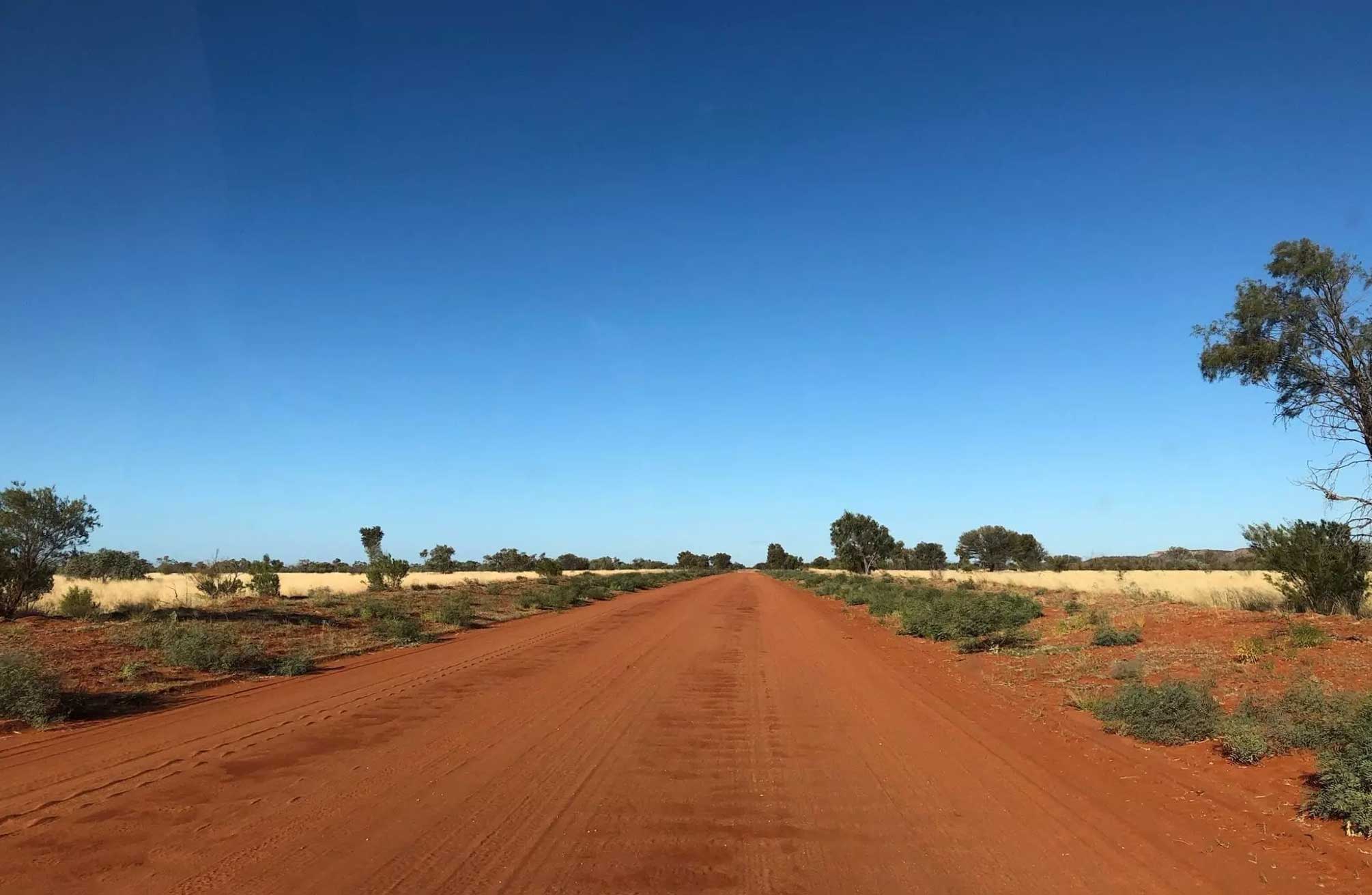
I first visited Alice Springs in the 1990s when I was working as an IT systems analyst for the Australian federal government, and I undertook a one day side-trip that allowed me to see some scenery around “the Alice”. But this time I wanted to see more. Driving up through Queensland is not exciting. The roads are gun-barrel straight and drab eucalypt trees and shrubs proliferate. Northern Queensland is featureless for large distances, at times almost looking like an alien planet.

The road from Longreach to Mount Isa runs through typical northern Australian open woodland with low eucalypts and tall grasses. It’s unremarkable aesthetically albeit undulating enough to avoid monotony.


Motels
Driving around Australia is a sobering experience for the uninitiated. Motels cost $140 to $200 a night, and it’s not unusual for the air-conditioner to malfunction, the fridge to be lukewarm, the bed to be soft and saggy, the carpets to be filthy and mosquitoes to harass you all night. Notwithstanding that, you’ll find most establishments earning 5-star reviews online, proving that many tourists are easily pleased. On the rare occasion that I came across a truly well-run motel where everything worked and the management took some pride in their product, it was a delightful relief! First world problems, right?
Northern Territory
Crossing into the Northern Territory, I stayed a night in Tennant Creek. Originally from Africa, a refugee from crime and violence, I was somewhat taken aback by both Tennant Creek and Alice Springs, where Aboriginal youth crime is out of control. The motel in Tennant Creek was surrounded by a high fence, locked gates and razor wire. The (Indian immigrant) owner-manager said the crime was so bad that he had recently sold the motel to a mining company that was going to use the motel as a hostel for fly-in fly-out workers. Likewise the motel in Alice Springs had high a barbed wire fence and security gates, locked at night. Tourists were thin on the ground at both establishments. Echoes of Africa, one could not help thinking.

The Mereenie Loop Road


To approach the Mereenie Loop, you drive southwest from Alice Springs along Namatjira Drive. I was there at dawn and so the colours in the photos are soft and a bit washed out.


Despite travelling in a 2WD vehicle, I decided to attempt the infamous Mereenie Loop road, an unpaved 155 km stretch notorious for damaging 4WD vehicles, but boasting wonderful scenery and landscapes, as well as wild camels, wild horses (known as brumbies), emus, kangaroos, dingoes, wild donkies and goannas (huge lizards).

Car hire companies forbid people from travelling this stretch. But what the hell, I was going to do it now or never. It is indeed a nasty stretch and I only attempted it because I’ve been driving for 50 years with extensive dirt road experience. I even learned to drive in a Land Rover in Botswana on unpaved roads. Even so, I kept to 50 km/h and was on full alert the whole way. And I needed to be. The corrugations were the worst I have ever seen, bad enough to shake loose car parts. Numerous washouts that could mire any vehicle dotted the route.


Huge potholes appeared right in front of me, as if out of nowhere, and instant reactions were required to prevent a smashed axle or wheel. I stopped along the way and took a quick video from Ginty’s Lookout, shown below. I passed only two vehicles (both 4WDs) the whole way; silence and a desert breeze dominated the scene, a desolate beauty. Once they pave this road, as is apparently planned, this desolation will disappear under a tourist onslaught.
A few nasty bumps later —caused by bottoming out— and then I was through, feeling exhilarated that I’d made it! I would not recommend it to the average driver though, even in a 4WD. Very serious mishaps are common here.
But the scenery was superb.


King’s Canyon area
The landscape around the King’s Canyon region is interesting, featuring Desert Oaks, a Casuarina family tree.


Ayers Rock and the Olgas
Some of the most famous tourist destinations in Australia, Ayers Rock (Uluru) and the Olgas (Kata Tjuta) are unfortunately hopelessly over-commercialised and over-regulated. The drawbacks are legion: the giant rocks are very remote, there’s a hefty entrance fee, no accommodation was available at short notice, and every activity costs plenty. Pricey and noisy helicopter rides are de rigueur, but at the same time I would strictly not be allowed to fly my drone there. Ah, Australia. Mark Twain once said that a mine is defined as ‘a hole in the ground with a liar standing next to it’. Ayers Rock and the Olgas are similarly big lumps of sandstone surrounded by thieves. So I decided to give them a miss. I’m not interested in tourist traps and prominent features as much as the textures and general scenery, the landscape itself.